

The Missing Link Between Scattered Marketing Activities and Predictable Growth
Most businesses don’t fail because their product is weak or because their marketing channels don’t work.
They fail because their marketing, sales, and customer journey are not connected into a single, cohesive system.
In a world where buyers are more informed, more distracted, and more selective than ever, relying on one channel or one tactic is no longer enough. SEO alone won’t scale you. Paid ads alone won’t scale you. Social content alone won’t scale you.
A full-funnel strategy is the only way to engineer predictable, repeatable, and scalable growth.
Whether you’re an early-stage company trying to gain traction or a mature business stuck in a plateau, this approach changes everything. Here’s why.
What Is a Full-Funnel Strategy?
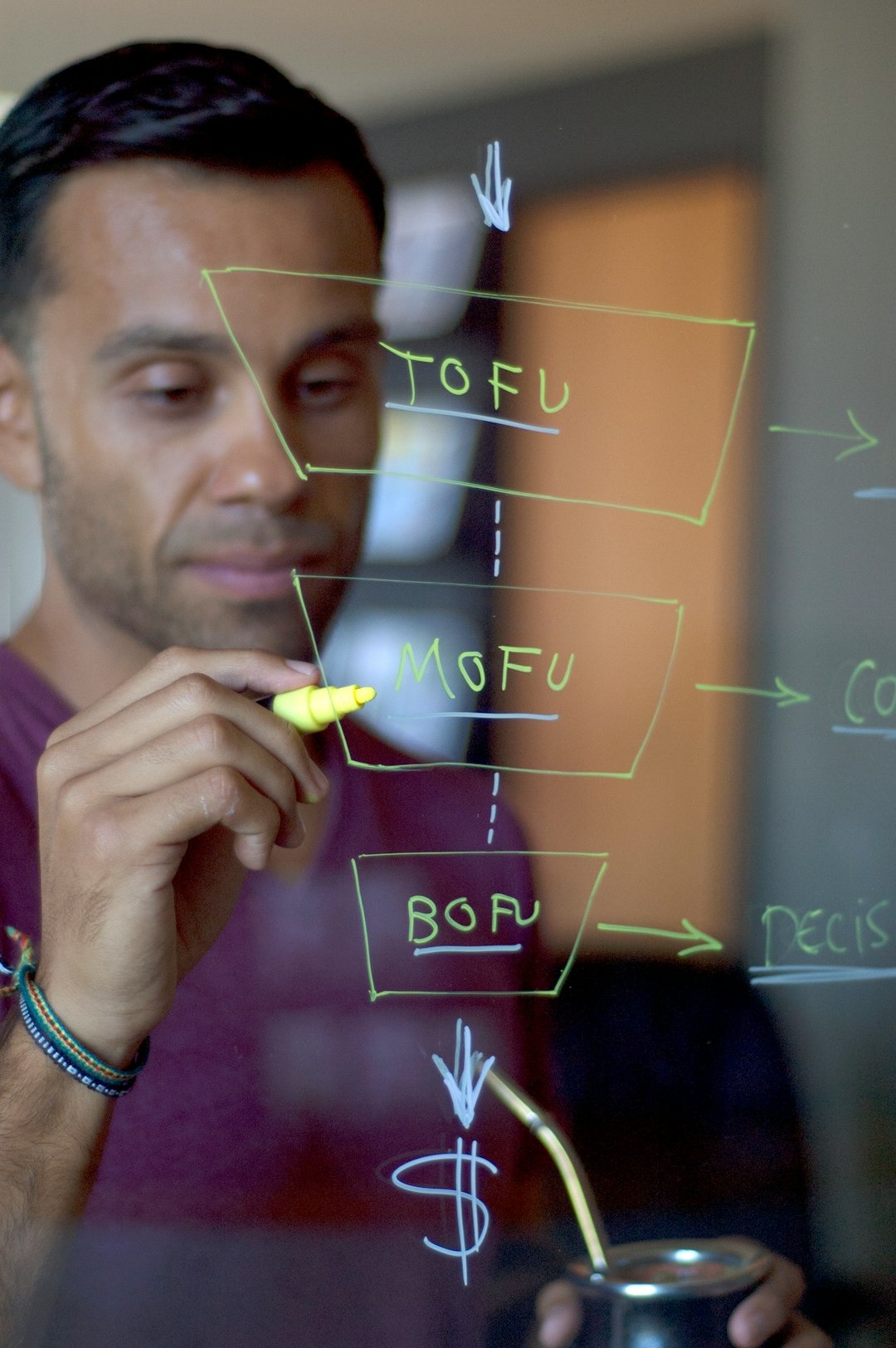
A full-funnel strategy integrates every stage of the buyer journey—from awareness to conversion to retention—into one unified system.
It covers:
Top of Funnel (TOFU)
Demand creation, brand visibility, content, social media, thought leadership.
Middle of Funnel (MOFU)
Education, nurturing, retargeting, authority building, email sequences.
Bottom of Funnel (BOFU)
Conversion, sales enablement, landing pages, offers, case studies, sales calls.
Post-Purchase (Retention & Expansion)
Onboarding, customer success, upsell/cross-sell, advocacy.
A full-funnel strategy ensures that every stage flows logically into the next, and nothing breaks the customer’s momentum.
Why Businesses Struggle Without a Full-Funnel Strategy
Most businesses have fractured systems:
- Marketing pushes leads but sales don’t follow up consistently.
- Paid ads bring traffic but the website doesn’t convert.
- SEO drives visibility but the sales process is unclear.
- Sales get opportunities but there’s no nurturing system in place.
- Customers buy once and disappear due to a lack of retention strategy.
This fragmentation creates:
- Leaky pipelines
- Poor conversion rates
- Wasted marketing spend
- Inconsistent results
- Growth plateaus
A full-funnel strategy fixes the real underlying problem: disconnected activities that don’t support each other.
5 Reasons Every Business Needs a Full-Funnel Strategy
1. It Aligns Marketing and Sales Into One Revenue Engine
Marketing and sales often operate as separate teams, with different goals, different insights, and different definitions of success. This creates friction and inefficiency.
A full-funnel strategy forces alignment:
- Shared KPIs (pipeline, revenue, CAC, LTV)
- Clear lead qualification and handoff processes
- Unified messaging and audience targeting
- Single source of truth for data
When marketing and sales work as one system, conversions accelerate and revenue becomes predictable.
2. It Ensures You Reach Buyers at Every Stage of Their Journey
Not every buyer is ready to purchase. In fact:
- 3% are in-market now
- 20% are problem-aware
- 77% are not actively searching
If your strategy only targets the 3% ready to buy, you’re losing the majority of your market.
A full-funnel strategy:
- Creates demand among those not yet searching
- Educates and nurtures those exploring options
- Converts warm prospects when timing aligns
You’re no longer dependent on “ready-to-buy” leads—you create your own demand.
3. It Increases Conversion Rates Across the Entire Journey
Many businesses think they need more leads.
In reality, they need better conversion systems.
A full-funnel strategy focuses on:
- High-quality messaging
- Funnel architecture
- Landing page optimisation
- Sales enablement
- Retargeting sequences
- Automated nurturing
This improves:
- Lead-to-MQL conversion
- MQL-to-SQL conversion
- SQL-to-customer conversion
Even small improvements across each stage compound into massive revenue gains.
4. It Reduces Customer Acquisition Costs (CAC)
Inconsistent, channel-only marketing is expensive.
When you lack a full-funnel system, you pay for:
- Cold traffic that doesn’t convert
- Leads that go cold due to lack of nurturing
- Sales calls with unqualified prospects
- Repeated campaigns trying to recapture lost prospects
A full-funnel strategy reduces CAC by:
- Improving conversions
- Increasing lead quality
- Reducing waste
- Leveraging automation
- Strengthening brand trust
Your money goes farther because every activity supports the next.
5. It Creates Sustainable, Predictable, and Scalable Growth
Tactical marketing delivers short-term wins.
Full-funnel systems deliver long-term impact.
A full-funnel strategy gives you:
- Consistent pipeline
- Clear forecasting
- Measurable data at every stage
- Repeatable processes
- Stronger customer retention
- Higher lifetime value (LTV)
This is what allows businesses to escape the cycle of “feast and famine” and scale with confidence.
Why a Full-Funnel Strategy Outperforms Single-Channel Agencies
Most businesses hire:
- An SEO agency
- A PPC agency
- A social media agency
- A content agency
Each works in a silo. None understand your entire revenue engine.
This leads to:
- Misalignment
- Duplicate work
- Conflicting strategies
- Broken customer journeys
- Poor lead handoff
- Untapped revenue opportunities
A full-funnel agency looks at the entire system, not just one part of it.
They fix:
- Positioning
- Messaging
- Funnels
- Sales process
- CRM workflows
- Automation
- Tracking & attribution
- Customer lifecycle
Because growth doesn’t come from a channel—it comes from a system.
How to Get Started with a Full-Funnel Strategy
A strong full-funnel approach begins with four foundational steps:
1. Diagnose the real bottlenecks
Before you choose tactics, you must understand what’s broken.
2. Build the core infrastructure
Messaging, ICP, funnels, CRM, automation, tracking.
3. Connect your acquisition channels
SEO, PPC, content, social, outbound—all unified under one strategy.
4. Optimise relentlessly
Review every step, every touchpoint, every metric to refine performance.
Conclusion: A Full-Funnel Strategy Is No Longer Optional
The businesses winning today aren’t the ones doing the most marketing.
They’re the ones with connected marketing, sales, and customer operations working as one.
A full-funnel strategy is the bridge between:
- Visibility and conversions
- Leads and sales
- Traffic and revenue
- Growth and scalability
It’s the difference between chaotic marketing and engineered success.
If you want real growth—not just activity—you need a full-funnel system powering your entire business.